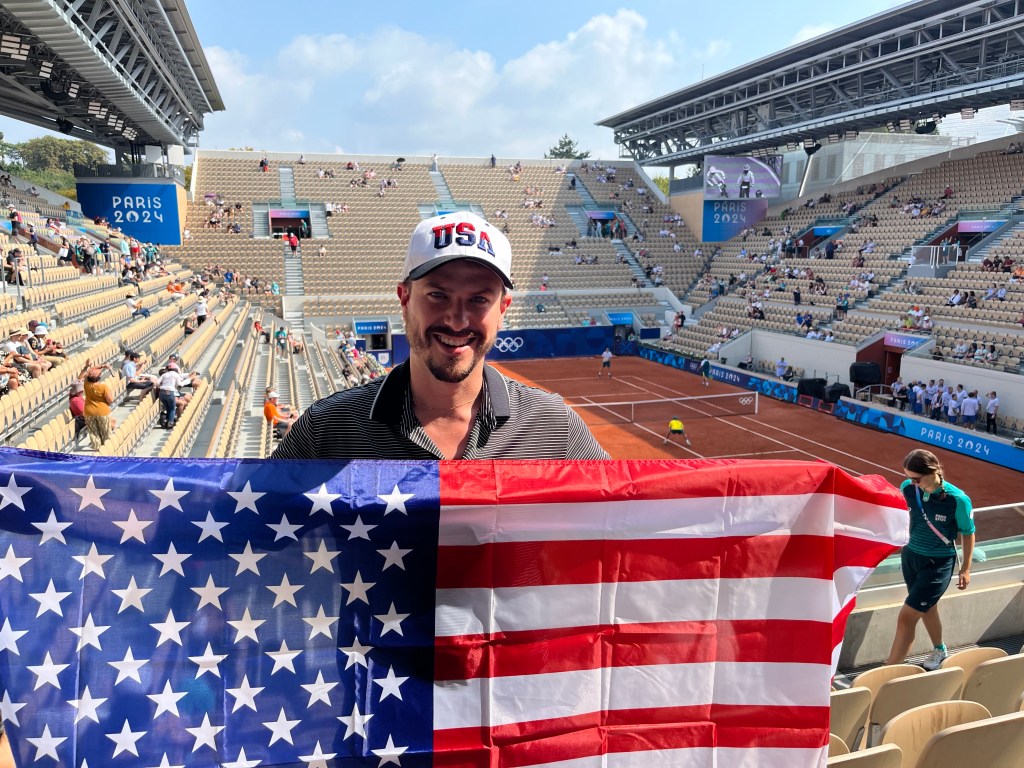
Attending the 2024 Paris Olympic Games was a truly unforgettable experience. I had prepared myself for a bustling, chaotic event, but what I encountered was something entirely different—an exceptionally organized and surprisingly affordable adventure.
From New Year’s Eve Chaos to Olympic Bliss
After the chaotic New Year’s Eve celebration on the Champs-Élysées, where unexpected metro closures and blocked entrances created confusion and frustration, I was prepared for similar challenges during the Olympics. However, what I encountered was something entirely different—an exceptionally organized and surprisingly affordable adventure.
Here are some pictures and videos from New Years Eve:
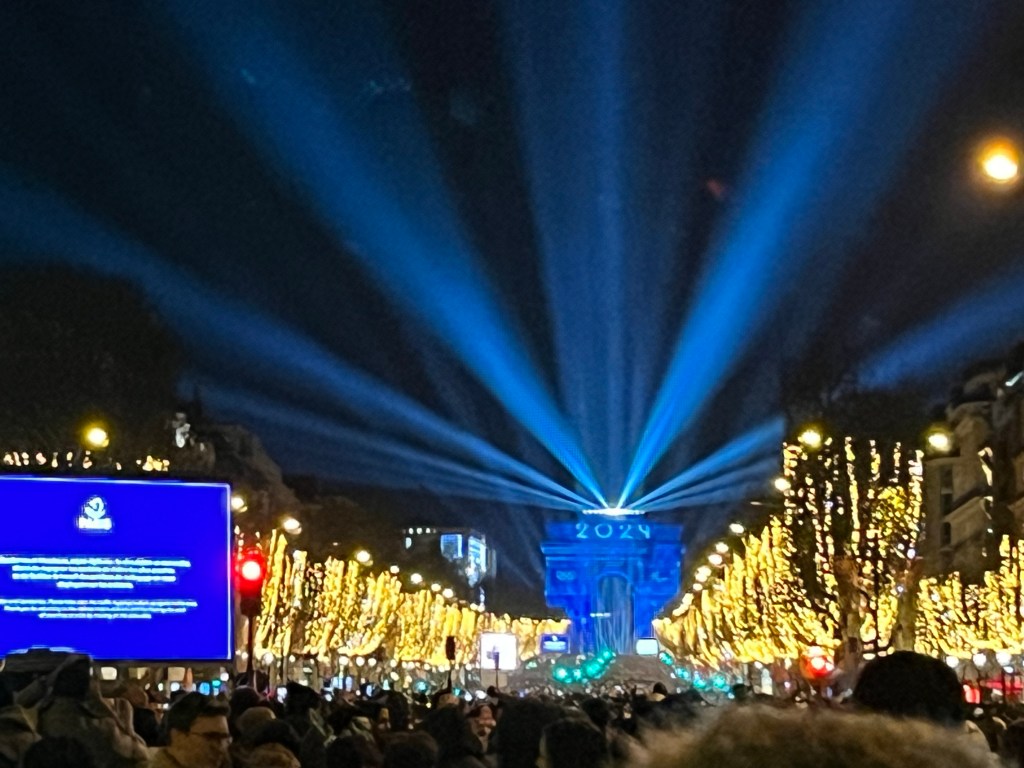
During the New Year’s Eve celebration on the Champs-Élysées, the atmosphere was lively, but the event was marred by significant logistical issues. Despite the festive spirit, many attendees, including myself, were caught off guard by sudden metro station closures and unclear instructions about how to enter the area. This left me worried about how Paris would handle the massive crowds expected during the Olympics.
The following video is to give you an idea of the crowd size that night:
To my pleasant surprise, the organization of the Olympic events was impeccable. From seamless transportation to well-managed venues, everything ran smoothly, making my Olympic experience not only memorable but also a stark contrast to the disarray I had encountered just months earlier on New Year’s Eve!
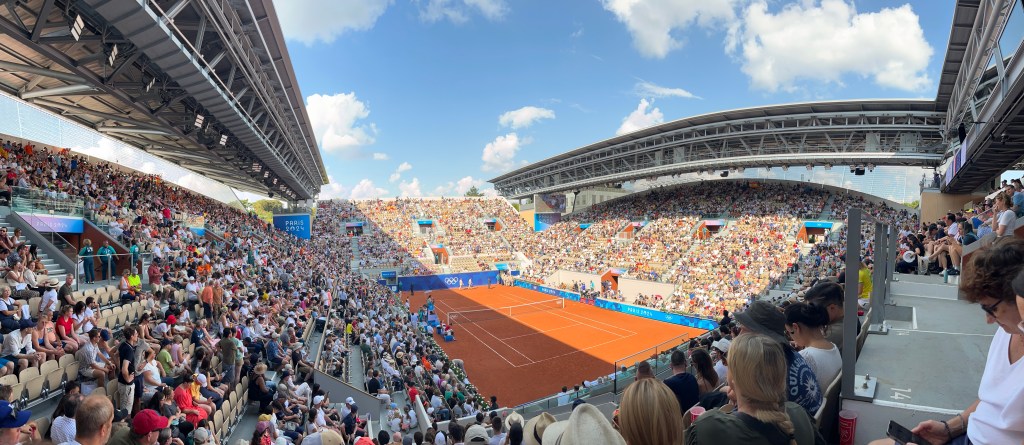
August 2, 2024: A Day at Suzanne Lenglen Court, Paris
The overall organization of the events was impressive. My visit to Suzanne Lenglen Court on August 2nd was a highlight, where I watched intense matches, including the Men’s Doubles Bronze Medal Match between Great Britain and Australia, and the Mixed Doubles Bronze Medal Match featuring teams from the USA and Canada. The venue was steeped in history, named after the legendary Suzanne Lenglen, and it buzzed with Olympic spirit despite the absence of American singles players in that session. The court, named in honor of the legendary French tennis star Suzanne Lenglen, who revolutionized the sport in the 1920s, provided an evocative backdrop for the high-stakes matches of the day.
The atmosphere inside the stadium was electrifying, charged with the Olympic spirit that brought together fans from all corners of the globe. Although this particular session did not feature any American athletes, the energy was palpable, with every point fiercely contested. The crowd’s enthusiasm was a testament to the unifying power of the Olympics, transcending national boundaries.
USA chant
Aussi Chant
Adding to the fun, the Australian fans brought their own flair with a humorous chant during the doubles match. Their lighthearted and witty cheer not only supported their team but also brought smiles and laughter to everyone in the stadium. It was a perfect example of how sports can unite people in joy and camaraderie, making the event even more special.
One aspect that stood out was the streamlined, cashless payment system in place. All transactions within the venue were restricted to Visa tap cards, reflecting the broader trend across Olympic sites towards modern, efficient payment solutions. This was just one of the many ways in which the organizers demonstrated their commitment to creating a seamless and secure environment for all attendees.
Security was another significant feature of the day. An overwhelming police presence ensured the safety of athletes and spectators alike, a necessary measure given the scale and global significance of the event. Despite the stringent security, the atmosphere remained relaxed and enjoyable, a fine balance that Paris managed to achieve beautifully.
Overall, the day at Suzanne Lenglen Court was a powerful reminder of the Olympics’ enduring legacy. It showcased not only the historical significance of the Games but also how they continue to evolve with the times, integrating modern technology and heightened security measures to deliver a world-class sporting event. The RER C train, which I took after the tennis match, was nearly empty—a stark contrast to the packed metros one might expect during such a major event.
After attending the tennis match, we decided to explore the Place de la Concorde, where last-minute tickets were available for just €24 through the Paris ticketing app. This turned out to be an excellent decision, as the venue was bustling with activities and offered a unique Olympic experience.
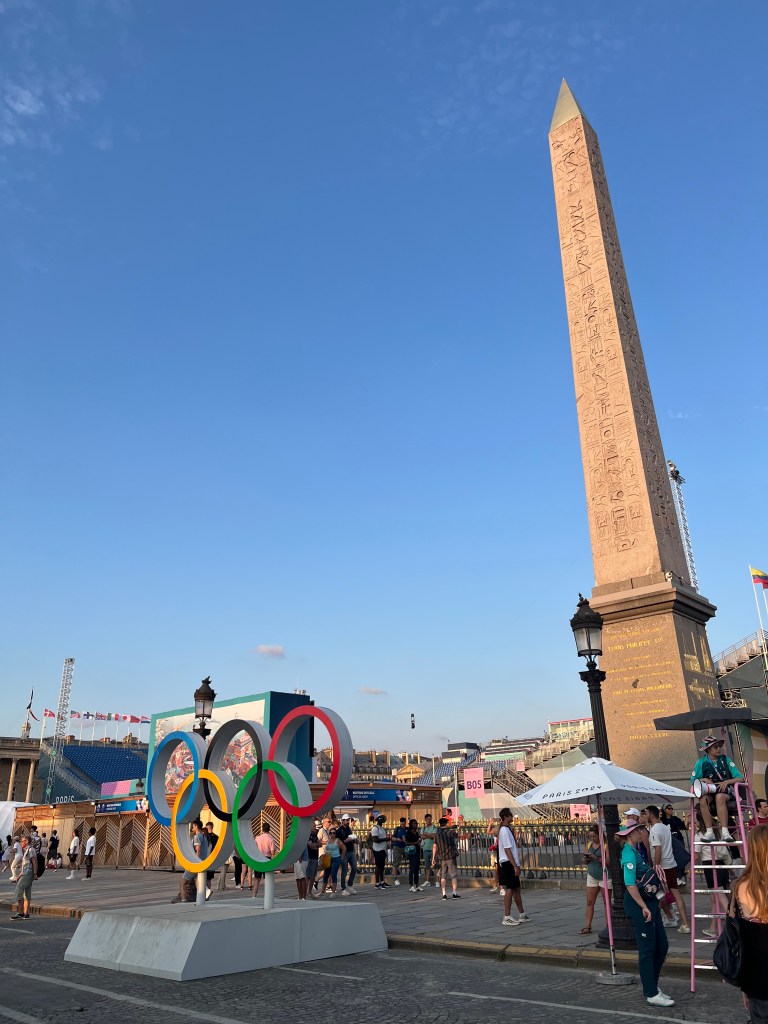
The Place de la Concorde had been transformed into the “Parc Urbain,” a dynamic space dedicated to urban sports and culture. Inside, we were able to watch various events like skateboarding, BMX freestyle, and 3×3 basketball without needing to purchase a separate seat. The open layout allowed us to move freely and enjoy the competitions from different vantage points.
This was the free viewing area for the 3×3 basketball

In addition to the thrilling sports events, the area buzzed with vibrant activities that kept the energy alive throughout the day. Live DJ sets and dynamic dance performances filled the air with excitement, while athlete demonstrations showcased incredible skills up close. A standout moment was witnessing a live painting session by the talented artist Kashink, adding a splash of creativity to the electrifying atmosphere.
For those eager to keep up with all the Olympic action, a giant screen broadcasted live competitions, creating a communal space where fans could cheer on their favorite athletes.
The atmosphere reached fever pitch during the swimming events, especially as the crowd erupted in support of Léon Marchand, who captured three gold medals and set new Olympic records in the 400m individual medley and 200m butterfly. The excitement peaked when I watched him clinch his fourth gold medal in the men’s 200m individual medley final, all from the lively hub at Place de la Concorde.
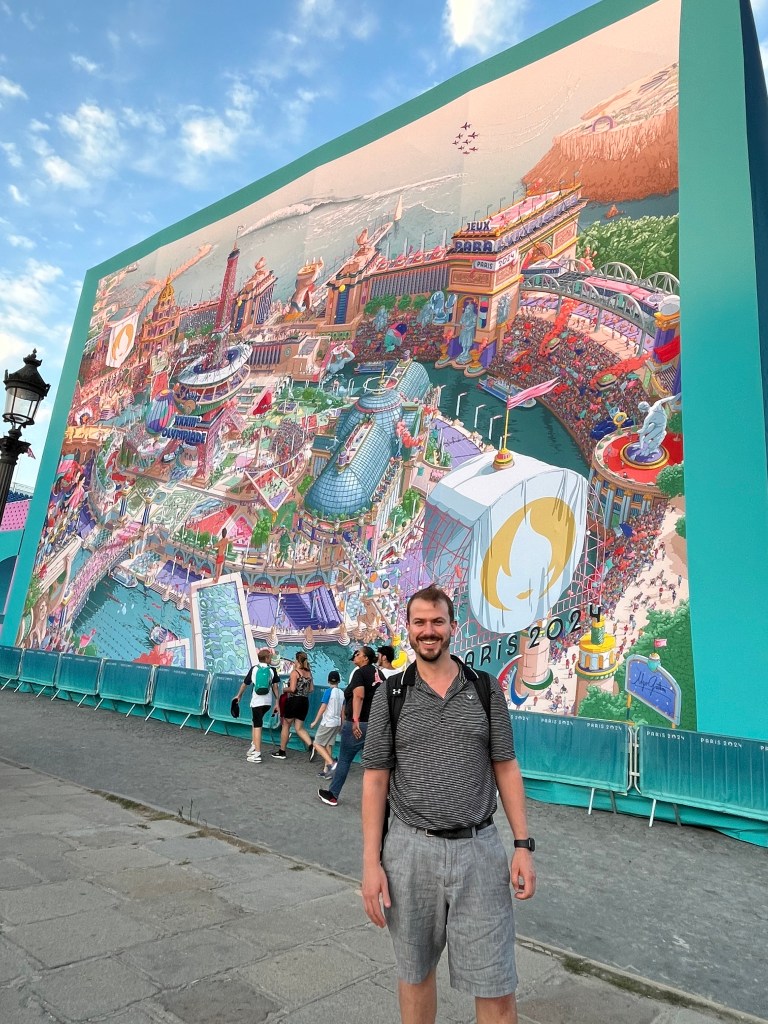
At the Place de la Concorde during the Paris 2024 Olympics, the iconic Olympic and Paralympic posters, designed by Parisian illustrator Ugo Gattoni, are on display. These posters are part of a larger artistic project that visually represents the spirit and values of the Games. The posters feature vibrant illustrations of Paris’s famous landmarks, including the Eiffel Tower and the Arc de Triomphe, intertwined with dynamic scenes of athleticism. The design is a diptych, meaning the Olympic and Paralympic posters can stand alone or be combined to form a unified image, symbolizing the harmony and shared vision of the Games.
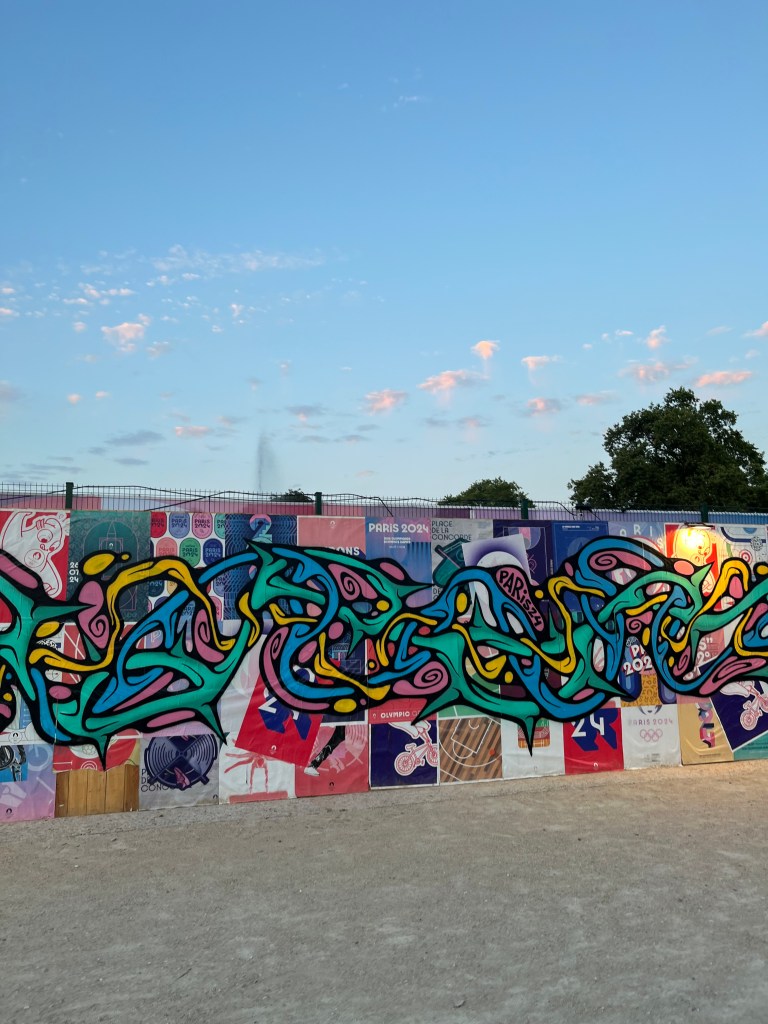
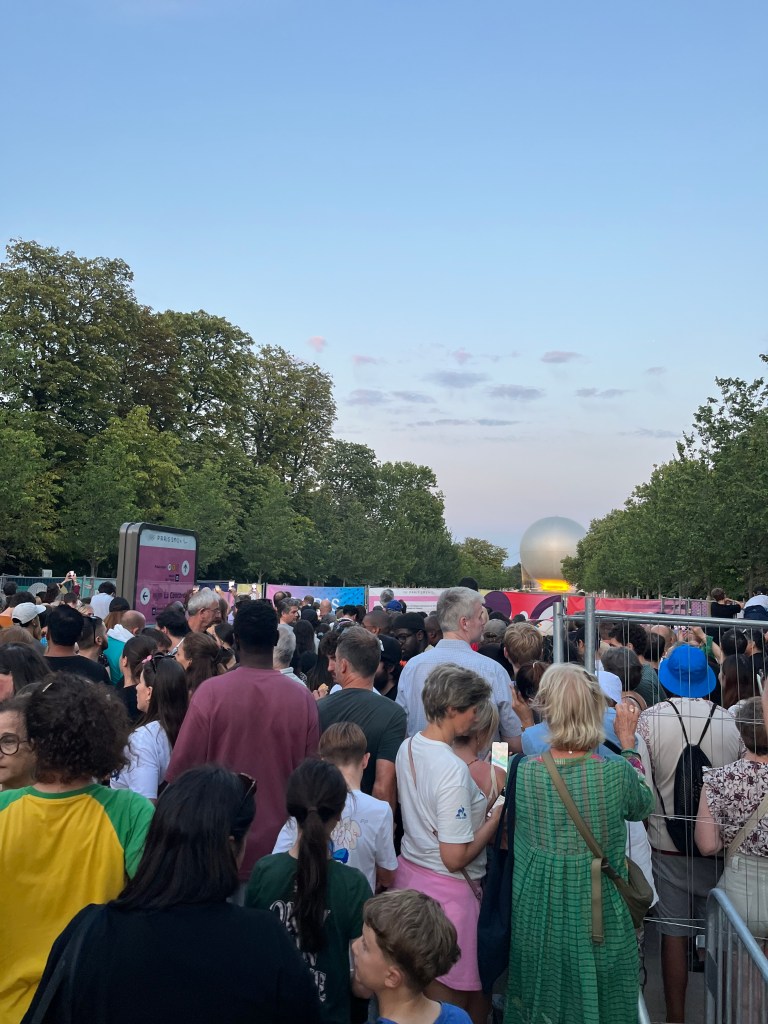
We stayed in downtown Paris on the night of August 2nd for just 130 euros, which was an incredible deal, especially considering Paris’s usual rates. Surprisingly, there were fewer tourists than expected during the Olympic Games, as many visitors opted for other European destinations like Barcelona and Rome. The influx of tourists in those cities contrasted sharply with the more relaxed atmosphere in Paris, where most visitors were there specifically for the Olympics. Booking our hotel last minute turned out to be a smart move; when reservations first opened over a year ago, prices were nearly five times higher. However, with many hotels not selling out and Parisians renting out their apartments on platforms like Airbnb, hotel rates plummeted during the Games, offering great value for those who waited.
The next day, August 3rd, we caught the last train back to Clermont-Ferrand at 6:57 pm, allowing us to enjoy the free olympic events during the day, including the men’s Olympic road cycling race, a grueling 273-kilometer event that was both physically and technically demanding. The race began at the Trocadéro near the Eiffel Tower, taking riders through a challenging course that included 13 significant climbs in the surrounding areas of Paris. The race culminated in an intense finale with three laps of a city circuit that included the steep, cobbled climb of Montmartre, just below the iconic Sacré-Cœur Basilica.
The route provided a stunning backdrop as the cyclists tackled the hilly terrain and tight, cobbled sections of Paris’s historic streets. The race ended with a thrilling sprint finish on the Pont d’Iéna, directly in front of the Eiffel Tower. This event not only tested the endurance and skill of the athletes but also captivated a large, enthusiastic crowd that gathered along the route, especially at Montmartre, where fans lined the streets to cheer on the cyclists
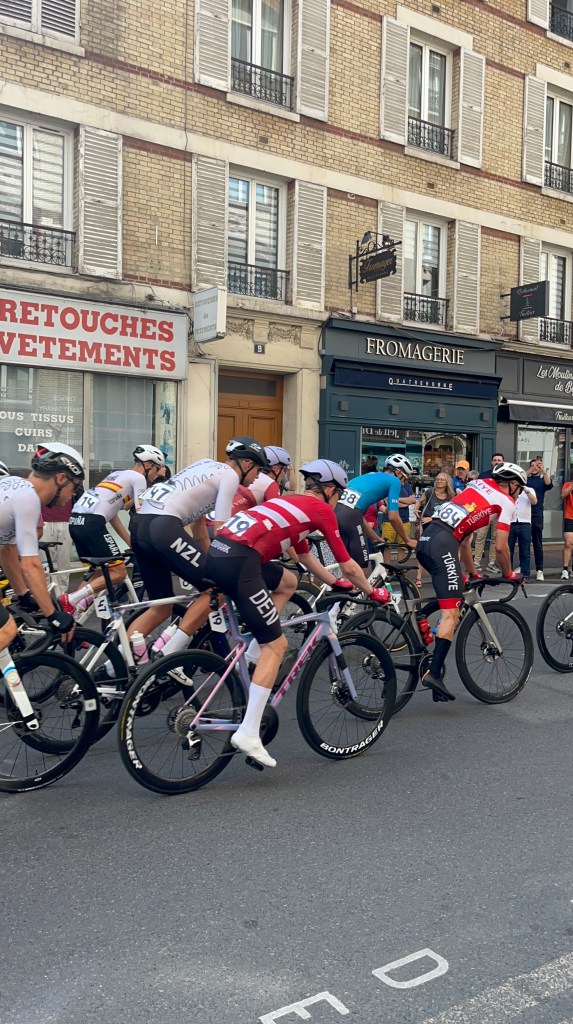
After catching the bikers leave Paris in the moring we walked around the city and stopped for a quick visit at the Petite Palace, a free museum right in the heart of the olympic festivities.

After watching the cyclists depart from Paris in the morning, we took a stroll through the city and decided to visit the Petit Palais. Normally a serene museum known for its vast collection of art spanning from antiquity to the early 20th century, the Petit Palais was buzzing with energy due to the Olympic festivities. A significant portion of the museum had been transformed into a VIP area and fan zone, complete with a giant screen broadcasting live Olympic events. The atmosphere inside was anything but quiet, as crowds gathered to cheer on their favorite athletes in a space that perfectly blended culture with the excitement of the Games. The ongoing “Body in Motion” exhibition, which explored the relationship between art and sport, added to the dynamic environment, making our visit both lively and culturally enriching.

Towards the end of the day, we had the chance to witness the bike racers as they made their dramatic return into Paris.
The race had been intense, with Belgium’s Remco Evenepoel leading the charge after a powerful performance throughout the day. Evenepoel had managed to break away from the pack during the grueling climbs and maintained his lead as the riders entered the city.
As the cyclists approached the historic Louvre gates, the tension was palpable. Evenepoel, followed closely by Stefan Küng and Michael Woods, navigated through the gates with precision, the iconic setting adding to the drama of the race.

The cobbled streets and sharp turns challenged the riders, but Evenepoel’s earlier efforts ensured he stayed ahead.
After this exhilarating spectacle, where the riders passed in both directions in front of the Louvre, we made our way to Gare de Bercy to catch our train home, reflecting on an unforgettable day in Paris.
August 9th
The next week, we returned to Paris on August 9th for just one day to catch the wrestling matches at the temporary stadium at Champs de Mars. From Clermont-Ferrand, it was surprisingly easy and affordable to visit Paris for a single day during the Olympics. We were able to attend the 11am event and easily catch the 6 p.m. train home, making the whole experience extremely accessible on a budget.
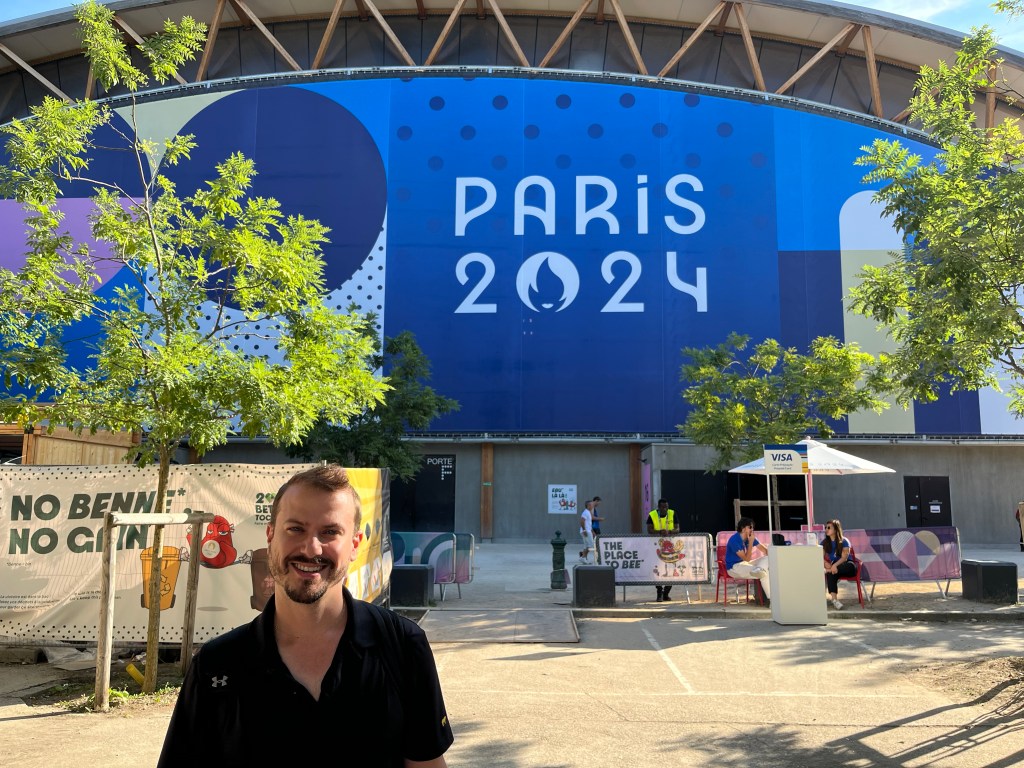
What truly shocked me was how many French people didn’t take the time to investigate or even attempt to attend the Olympics, often writing it off as too difficult or expensive. In reality, that couldn’t have been further from the truth. Despite the widespread belief that attending the Games would be a hassle or financially out of reach, we found that with a bit of planning, it was entirely feasible to enjoy the Olympic experience without breaking the bank. The misconception that the Games were inaccessible seemed to prevent many from even trying, which was unfortunate considering how close and affordable the events actually were for most people living in France thanks to the TGV and incredible train network around the country.
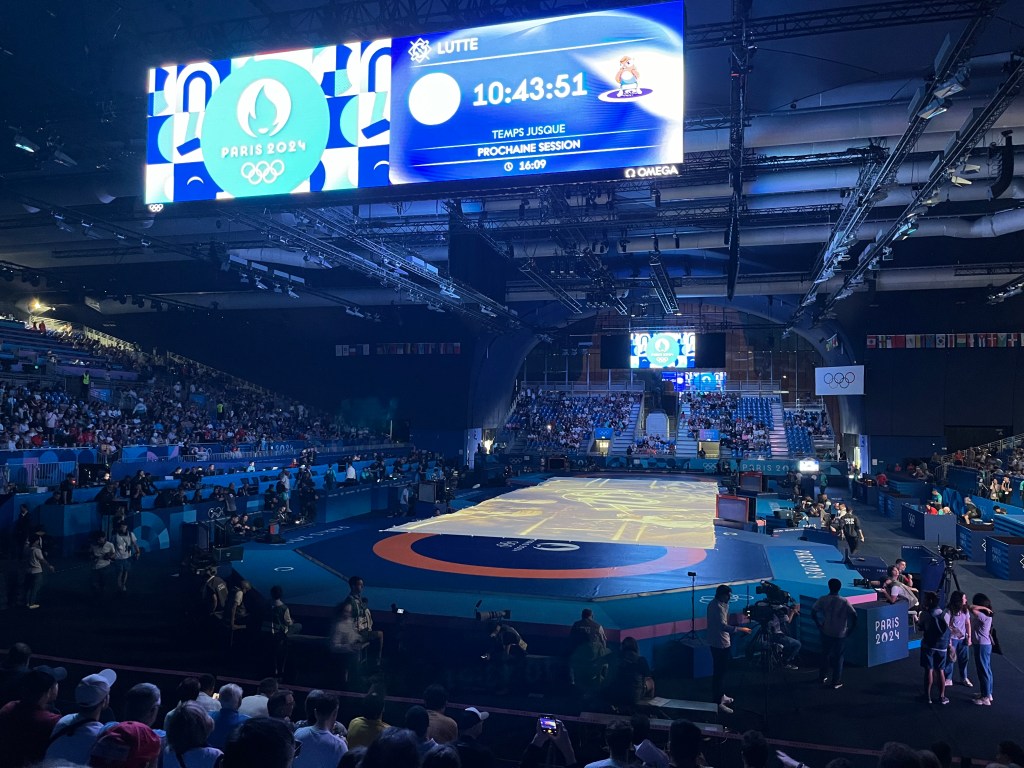
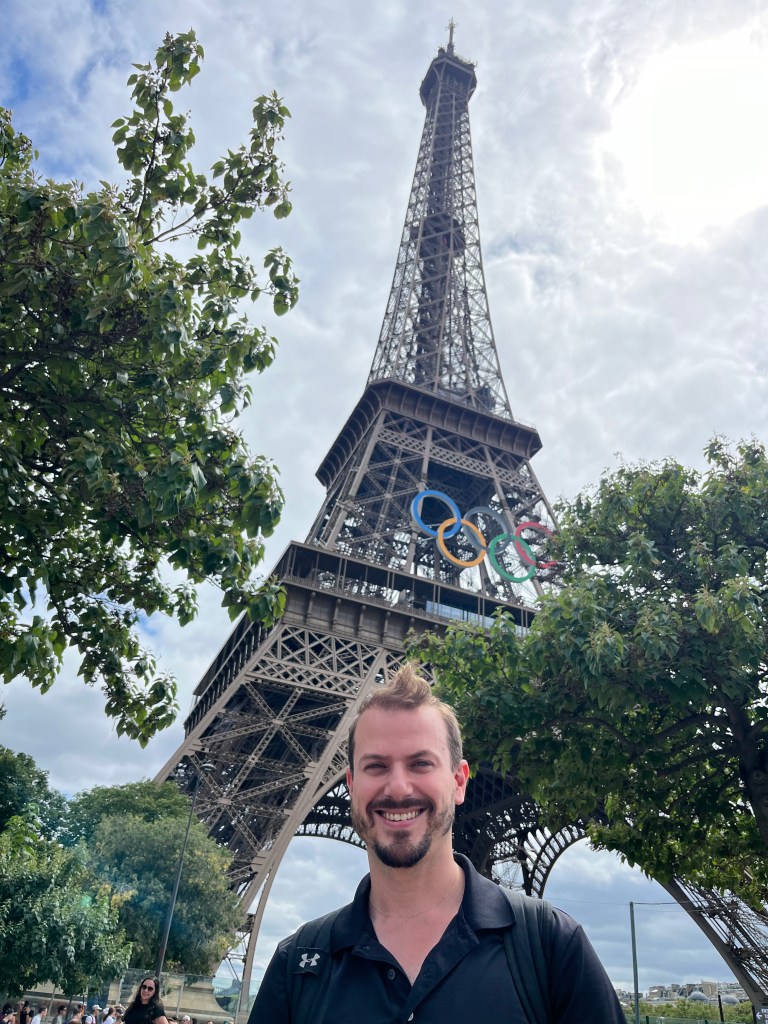
On August 9th, the wrestling matches at the temporary Champs de Mars Arena, an experience that turned out to be both thrilling and memorable. The arena, situated right in the shadow of the Eiffel Tower, provided an incredible backdrop for the intense Olympic competition. Despite its temporary nature, the arena was designed to accommodate a large number of spectators, and it served as a hub of excitement during the Games. It’s a shame that this impressive structure won’t be a permanent fixture in Paris, as it would have made a fantastic venue for concerts and special events long after the Olympics
The day was packed with high-stakes matches, including standout performances by American wrestlers. Kyle Dake, competing in the Men’s Freestyle 74kg, showcased his dominance early in the day, winning his quarterfinal match with an impressive 11-1 victory over Yones Emami of Iran. However, Dake faced a tough semifinal, where he was narrowly defeated by Japan’s Daichi Takatani in a close 20-12 match. Meanwhile, Aaron Brooks secured a bronze medal in the Men’s Freestyle 86kg category, adding to Team USA’s successes.
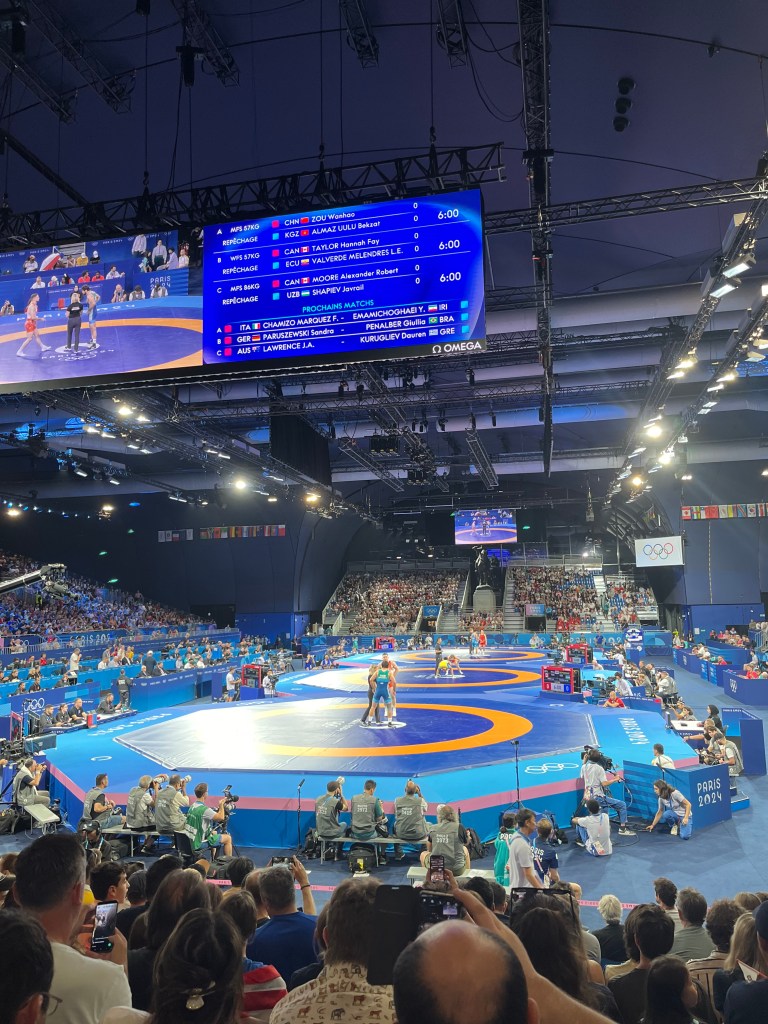
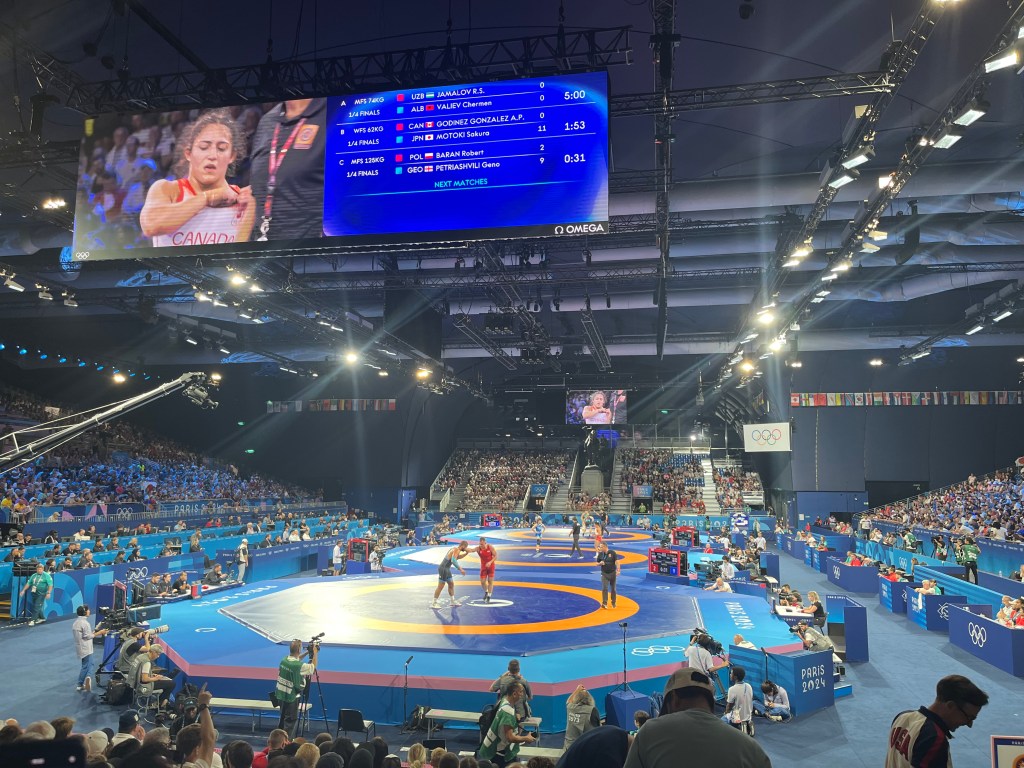
The energy in the arena was palpable as these athletes gave their all, and it was a reminder of how accessible and affordable attending the Olympics can be with a bit of planning. We easily managed a day trip from Clermont-Ferrand, returning home on the 6 p.m. train, making it a feasible and budget-friendly experience.
 Jeremy David-Paul Hartman, B.A.